Spain Train Crash: What We Know So Far
Spain Train Crash: What We Know So Far
Last updated based on the source material available for this report.
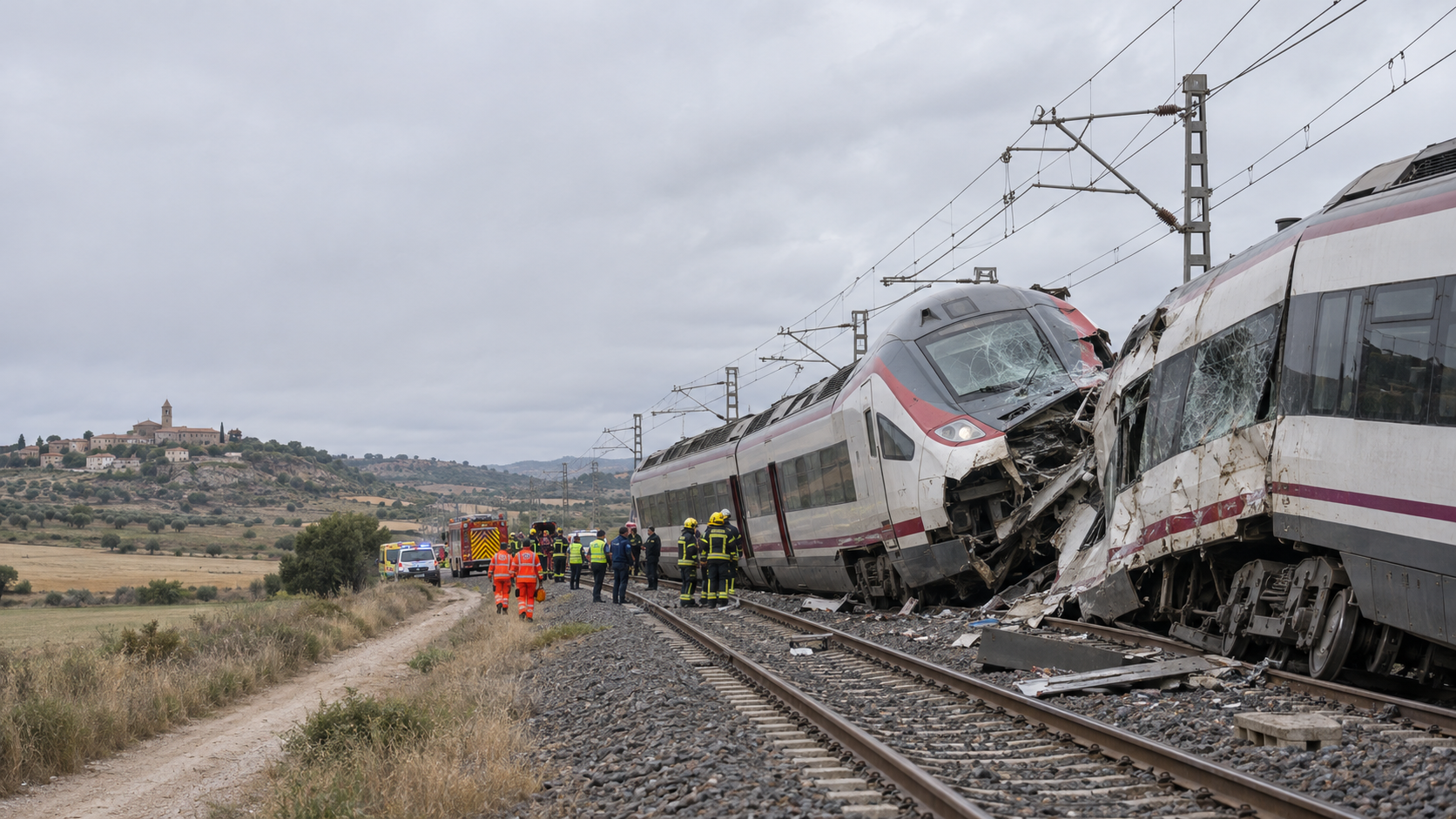
A train crash in Spain reportedly killed 68 people, according to a report about Prime Minister Pedro Sánchez’s response. Sánchez declared three days of national mourning after the disaster.
However, the supplied source summaries do not establish the crash’s exact location, date, train service, or cause. Those details should not be presented as fact without confirmation from Spanish authorities or fully accessible reports from reputable news organizations.
What Is Known About the Crash?
Reported death toll
The available report states that 68 people were killed. This is the only specific casualty figure provided in the supplied material. The number should be treated as the latest reported death toll rather than automatically considered final. Authorities may revise figures as victims are identified and records are reconciled.
The supplied summaries do not provide a reliable injury count, hospitalization figure, or survivor total.
Spain’s official response
Prime Minister Pedro Sánchez declared three days of national mourning after the crash. National mourning expresses official grief and solidarity, but it does not establish how the crash occurred or who may bear responsibility.
The available material does not confirm details about memorial ceremonies, family assistance centers, emergency hotlines, or other support measures.
What Remains Unconfirmed?
The supplied sources do not establish:
- The exact crash location.
- The date or time of the incident.
- The train’s route, operator, or number.
- The number of passengers aboard.
- The number of injured people or survivors.
- Whether the train derailed or collided.
- Whether mechanical failure, human error, signaling, track conditions, weather, or an external obstruction contributed.
These gaps show only that the supplied summaries lack enough evidence to confirm those details. They do not prove that the information is unavailable elsewhere.
Where and When Did the Crash Happen?
The available summaries do not identify a verified city, province, railway line, station, or section of track. They also do not provide a confirmed date or approximate time.
Those details are important for reconstructing the emergency response, identifying passengers, and determining which signals, control systems, and dispatch records were active. A verified location would also allow investigators to examine the relevant track, structures, signaling equipment, and surrounding conditions.
No confirmed sequence of emergency calls, rescue operations, medical evacuations, track closures, or passenger-identification efforts appears in the supplied material.
What Caused the Crash?
No final cause has been established in the available summaries. They do not confirm whether the incident involved excessive speed, a signaling problem, a track defect, a collision, equipment failure, human error, or another factor.
A Sydney Morning Herald summary described the crash as “inexplicable,” but provided no supporting evidence or official investigative conclusion. That wording should be treated as a report description, not as a confirmed finding.
Areas investigators may examine
Investigators would typically review, where relevant records are available:
- Train speed, braking, and event-recorder data.
- Driver actions, workload, communications, and training.
- Train maintenance and component condition.
- Signals, points, automatic protection, and control systems.
- Track condition, curves, gradients, crossings, bridges, and tunnels.
- Maintenance and inspection records.
- Weather, visibility, power supply, and possible track obstructions.
- CCTV footage, wreckage, debris patterns, and witness accounts.
A safety system’s presence does not prove that it operated correctly. Investigators must compare technical records with physical evidence and operating procedures.
Why the investigation may take time
A serious train crash can produce a complex evidence record. Investigators may need to combine event data, signaling logs, radio communications, dispatch records, maintenance documents, CCTV footage, component testing, wreckage analysis, and witness accounts.
An early hypothesis is not a preliminary finding, and a preliminary finding is not a final causal conclusion. Authorities can revise their explanation as new evidence emerges.
Victims, Survivors, and Families
The reported death toll is 68, according to the source describing Sánchez’s declaration of national mourning. The supplied material does not provide victim names, verified information about survivors, injury details, or hospital conditions.
Authorities commonly release identities only after formal identification and notification of relatives. Personal details should be reported only when confirmed and when publication serves a clear public interest.
Family support after a mass-casualty event may include information centers, missing-person hotlines, transportation, accommodation, psychological support, and legal assistance. None of these measures should be attributed to Spanish authorities without supporting evidence.
What the Supplied Sources Confirm
The material supports these points:
- A deadly train crash occurred in Spain.
- One report gives the death toll as 68.
- Pedro Sánchez declared three days of national mourning.
- CNN, The New York Times, and USA Today were described as examining what happened.
- A Sydney Morning Herald summary described the crash as “inexplicable.”
The supplied summaries from CNN, The New York Times, and USA Today do not provide specific crash details that can be independently presented here. The listed Sydney Morning Herald date of October 29, 2026 also requires verification before publication because it may be future-dated, incorrect, or lacking context.
What Investigators Will Examine Next
Investigators generally secure and document a crash site before moving wreckage, except when removal is required for rescue or public safety. They may record carriage positions, track damage, signal equipment, train components, debris patterns, rail marks, and damage to nearby structures.
They may also review train data, driver and dispatcher communications, signaling records, control-room logs, maintenance files, staff schedules, training records, previous safety reports, and CCTV footage.
Potentially relevant parties could include the train operator, infrastructure manager, maintenance contractors, equipment manufacturers, employees, and public oversight agencies. No party should be blamed before an official investigation or court process establishes responsibility.
Conclusion
Spain experienced a deadly train crash, and one available report identifies the death toll as 68 people. Prime Minister Pedro Sánchez declared three days of national mourning.
The supplied reports do not establish the crash’s location, timing, train service, injury count, or cause. They also do not confirm whether the incident involved a derailment, collision, signaling failure, mechanical problem, infrastructure defect, human error, or another factor.
Until authorities publish verified findings, all explanations should remain provisional.
Frequently Asked Questions
How many people died in the Spain train crash?
The supplied report states that 68 people were killed. The figure may be revised as authorities complete identification and investigation work.
What caused the crash?
The available summaries do not identify a confirmed cause. Investigators may examine the train, track, signaling systems, operating records, maintenance history, communications, and external conditions.
Where did the crash happen?
The supplied summaries do not provide a verified location. The city, railway line, and station should be added only after confirmation from an official statement or a fully accessible report from a reputable news organization.
Did Spain declare national mourning?
Yes. Pedro Sánchez declared three days of national mourning after the crash.
Is the reported death toll final?
The figure should be treated as the latest reported total, not automatically as final. Authorities may revise it as victims are identified and medical or investigative information develops.
Artikel Terkait
-
 Spain Train Crash Reports: What We Know So Far
-
 Florida Child Neglect Case: Safety and Legal Debate
-
 Christine Lagarde Reportedly Set to Leave ECB in February
-
 North Korea Fires Missiles as Border Tensions Rise
-
 Alaska Senate Race Drawn Into Dan Sullivan Spoiler Dispute
-
 King Tide Pushes Water to Midtown Beach Seawall